Châteauneuf-du-Pape
The Papal Wine Village and the Rhône Valley’s Most Famous Red
Fifteen minutes north of Avignon, the flat farmland along the Rhône river gives way to a low rise covered in vineyards, and at the top of that rise sits a small village with a ruined medieval tower at its center. The village is called Châteauneuf-du-Pape — literally, “the pope’s new castle” — and the wine produced on the slopes around it is, by almost any measure, the most famous red wine of southern France. Powerful, spicy, deeply colored, and built to age for decades, Châteauneuf-du-Pape is what happens when 700 years of papal politics, a peculiar kind of stone, and thirteen different grape varieties all come together in one place.
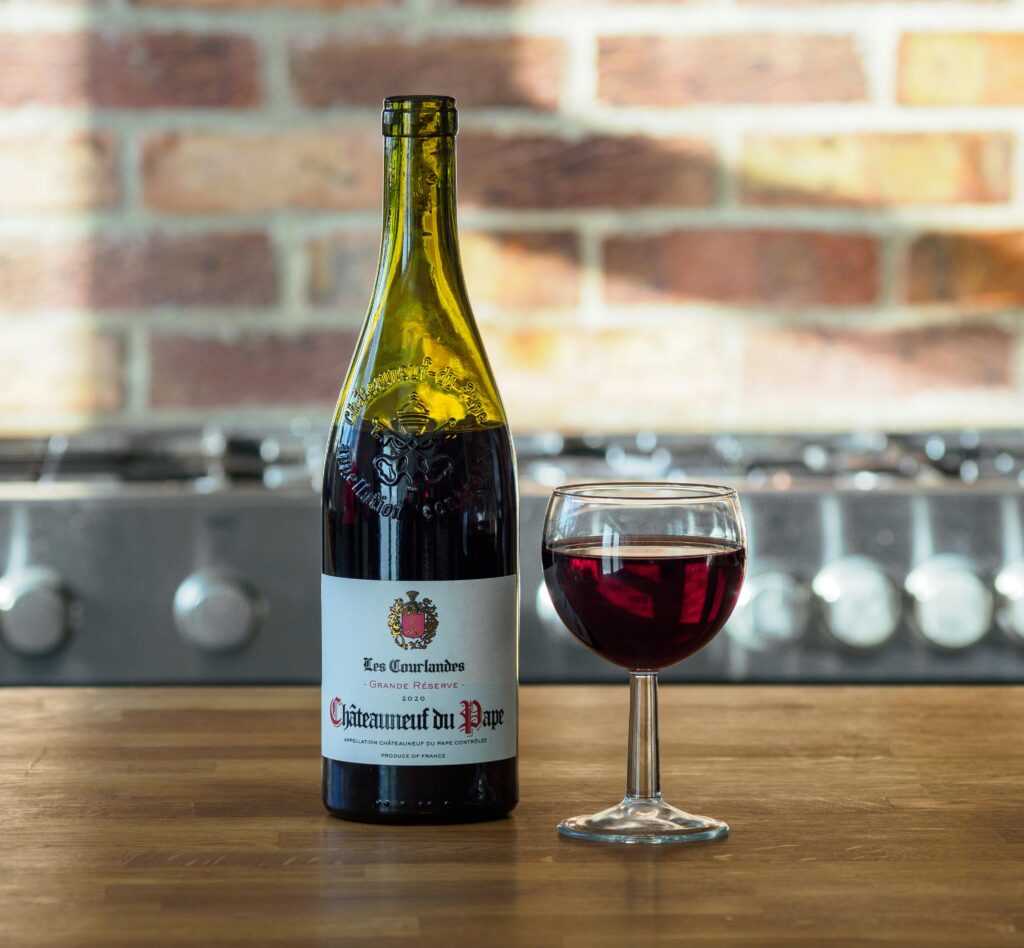
The village itself is small — about 2,000 people — and the vineyards cover roughly 3,200 hectares spread across the gently rolling land between Orange and Avignon. You can drive across the entire appellation in 15 minutes. But inside that small area is some of the most interesting wine in France, and some of the strangest vineyard soils you will ever see.
Why the Popes Come Into It
The name of the village is not a marketing invention. It is literal. In the early 14th century, when the papacy was based in Avignon, successive French popes took an active interest in the surrounding countryside. Pope John XXII, the second of the Avignon popes, built himself a summer residence on the hill above the small village of Châteauneuf-Calcernier in the 1320s — a fortified castle where he could escape the heat and politics of Avignon during the summer months. The village was renamed Châteauneuf-du-Pape in his honor. The pope’s summer castle was the “new castle of the pope,” and the name stuck.
The popes also planted vineyards on the surrounding hills. Wine had been made in the area since Roman times, but papal patronage turned Châteauneuf into a serious wine-producing region for the first time. The wine from the pope’s own vineyards was considered a specialty of the Avignon papal court, and the association of the village with ecclesiastical luxury gave its wine a reputation that would outlast the papacy itself by centuries.
When the papacy returned to Rome in 1377, the popes left behind their summer castle, their vineyards, and their name. The castle was gradually abandoned and fell into ruin. It was partially destroyed during the French Wars of Religion in the 16th century, and its final indignity came in August 1944, when retreating German troops blew up a portion of what was left. What remains today is a single dramatic fragment — a tall section of stone wall and one corner tower — standing at the top of the village, visible for miles in every direction. It is not a castle you visit so much as a ruin you climb to and stand beside, looking out over the vineyards the popes planted 700 years ago.
The Stones
The second thing you need to know about Châteauneuf-du-Pape, after the popes, is the stones. Walk into almost any vineyard in the appellation and the first thing you notice is that the ground is not really ground — it is a solid layer of large, smooth, rounded rocks the size of your fist or larger, packed so densely that you can barely see the soil underneath. These are the galets roulés, the “rolled pebbles” of Châteauneuf, and they are the single most distinctive feature of the region’s terroir.
The stones are ancient — deposited millions of years ago by glacial rivers flowing down from the Alps, then tumbled smooth as they rolled along the beds of prehistoric Rhône tributaries. Over time they accumulated on the surface of certain parts of the Châteauneuf plateau in layers sometimes several meters deep. Walking across a vineyard here is like walking on a beach. The sound is wrong, the footing is wrong, and your first instinct is that nothing should be able to grow in such a place.
And yet the stones are exactly what make the wine possible. During the day, they absorb and store heat from the intense Provençal sun. At night, they radiate that heat slowly back up into the vines, extending the ripening period and pushing sugar levels higher than they would otherwise reach. They also hold moisture from winter rains, releasing it slowly to the deep roots of the vines during the dry summer months.
And they suppress weed growth and reflect sunlight onto the undersides of the grape clusters, helping ripening even more. The galets are why Châteauneuf wines can reach alcohol levels of 14 or even 15 percent in good vintages — higher than almost any other major French red — and why the wines have their distinctive warmth, depth, and spiciness.
Not every vineyard in the appellation is stone-covered. The terroir of Châteauneuf is unusually varied, with patches of sandy soil, red clay, and weathered limestone mixed in with the galet-covered zones. Different producers use different soil types for different wines, and some of the most prized bottles come from blends of grapes grown on multiple soil types within the same estate. But when outsiders picture a Châteauneuf vineyard, they picture the stones — and for good reason.
The Thirteen Grape Varieties
Here is the third thing that makes Châteauneuf unusual: the appellation rules allow thirteen different grape varieties to be used in the wine. Not three or four, like Bordeaux. Not one, like Burgundy. Thirteen. Red grapes and white grapes together, all legally permitted in the same bottle of red wine.
The thirteen, for the record:
- Grenache (the dominant grape in almost all red blends, often 60–80% of the final wine)
- Syrah
- Mourvèdre
- Cinsault
- Counoise
- Muscardin
- Vaccarèse
- Terret Noir
- Picpoul (both red and white versions)
- Picardan
- Clairette
- Roussanne
- Bourboulenc
Some of the later grapes on the list are so rare that only a handful of producers still grow them at all. Most modern Châteauneuf reds are built around Grenache with supporting percentages of Syrah and Mourvèdre, and the other grapes appear only in small amounts — or not at all. But the legal possibility of thirteen varieties gives producers enormous flexibility, and the diversity of styles within the appellation is remarkable. One producer’s Châteauneuf can taste utterly different from the producer’s next door.
The appellation also produces white Châteauneuf-du-Pape, made from the permitted white grapes, though it accounts for only about 7 percent of production. Good white Châteauneuf is rich, nutty, and surprisingly ageworthy — worth seeking out, though much harder to find outside the region.
Tasting at the Domains
Châteauneuf-du-Pape has more than 250 producers, ranging from enormous family estates that ship wine around the world to tiny operations where a single winemaker farms a few hectares of stony ground. The best way to understand the wine is to taste at several different domains in a single day — the differences between neighboring producers can be dramatic, and a tasting trip through the appellation is one of the best wine experiences in southern France.
A few things to know about visiting:
- Appointments are expected. Most serious producers ask visitors to call or email ahead. Walking into a famous domain unannounced will sometimes work, but more often it won’t. If you want to visit specific well-known estates, reserve in advance — ideally a few weeks ahead.
- Tastings are often free. Unlike Napa or Bordeaux, where tasting fees of $30–50 per person have become standard, many Châteauneuf producers still offer complimentary tastings, sometimes with the genuine expectation that you’ll buy a bottle or two. This is changing — some of the most famous estates now charge for tours — but the tradition of free tasting is still strong.
- The village has tasting rooms. If you don’t want to drive between estates, several wine shops and official tasting rooms in the village of Châteauneuf itself offer flights of wines from multiple producers under one roof. The Vinadea wine shop in the center of the village is particularly well-regarded — you can taste a dozen different producers in a single sitting.
- Mornings are better than afternoons. Winemakers are more likely to be available to talk in the morning, before the lunch break. French wine regions take their lunch breaks seriously — many estates close from noon to 2 p.m. and don’t reopen until 2:30.
- Buy a few bottles, even if you don’t plan to bring wine home. It supports the producers who gave you their time, and a bottle of good Châteauneuf purchased directly from the domain costs a fraction of what it will in your home country.
What to Look For in the Glass
Châteauneuf-du-Pape is not a subtle wine. It is bold, warming, and distinctive even to tasters who don’t consider themselves wine experts. The classic flavor profile runs through dark red fruit (cherry, blackberry, plum), dried Provençal herbs (thyme, rosemary, lavender — what sommeliers call garrigue, the scent of the local scrubland), black pepper, licorice, leather, and a warm alcoholic depth that comes from those sun-baked stones. Good bottles have structure and balance; lesser ones can feel heavy and overripe.
The best Châteauneufs age exceptionally well. A well-made bottle from a good vintage will still be improving in 15 or 20 years, and legendary vintages from top producers can last 30 or more. Younger wines (say, 3–7 years old) drink well if they have been given an hour or two of air in a decanter or large glass before serving.
Pair it with what the Rhône valley produces: lamb, wild boar, duck, game birds, aged cheeses, anything rich and slow-cooked. Châteauneuf is the wine to drink with the heavy winter dishes of Provence — daube provençale, gardiane de taureau, cassoulet — not with salads or light fish.
What to Do in the Village Itself
The village of Châteauneuf-du-Pape is small and can be walked end to end in 20 minutes, but it rewards a slow wander. The main attractions:
- The castle ruin. At the top of the village, a short uphill walk from the main square. The single remaining wall and tower of the popes’ summer castle, with panoramic views in every direction — vineyards stretching to the horizon, the Rhône river to the west, Mont Ventoux in the distance, and the walls of Avignon just visible to the south on clear days.
- The Musée du Vin. A small but surprisingly good wine museum with exhibits on the history of Châteauneuf winemaking, the geology of the galets, and the traditional tools and methods of Rhône viticulture. Free and worth 30 minutes.
- The village tasting rooms and shops. Multiple wine shops in the center of the village offer tastings from multiple producers. A good option if you only have a few hours and don’t want to drive between estates.
- Lunch at a village restaurant. Several small restaurants in the village specialize in the local food-and-wine pairings. A long lunch with a glass of Châteauneuf and a plate of lamb or duck is exactly the right use of an afternoon here.
When to Visit
Wine regions have their own seasonal rhythms, and Châteauneuf is no exception:
- Spring (April–May): Vines are budding, the weather is mild, producers are finishing work on the previous vintage and starting to get visitors. An excellent time to visit.
- Early summer (June): Flowers in the vineyards, warm but not brutal weather, and fewer crowds than peak season. Also excellent.
- Summer (July–August): Hot, often crowded, and some producers are harder to reach because they are focused on preparing for harvest. Still possible, but less ideal.
- Harvest (September to early October): The most exciting time to visit, but also the busiest. Many producers are working around the clock to bring in the grapes and cannot accept visitors at all. Check carefully before planning a harvest-season trip — if you do get in, you will see the actual work of the vintage, which is unforgettable.
- Late autumn and winter: Quiet, intimate, and often the best time to meet winemakers themselves. You can often get appointments at estates that would be impossible to book in high season. The landscape is stark and the leaves have turned, and the wines are drunk in front of fires.
Where Châteauneuf Fits in a Provence Trip
Châteauneuf-du-Pape is a natural half-day or full-day trip from Avignon — the village is only 15 minutes away by car, and the driving distance between the two is short enough that you can easily base in Avignon and spend a day tasting in Châteauneuf before returning for dinner inside the papal walls. For wine-focused travelers, a full day in Châteauneuf can be combined with a morning visit to the Roman site at Orange (20 minutes north), where a remarkably preserved Roman theater and triumphal arch make for an excellent counterpoint to the afternoon’s wine tasting.
For travelers who want a more structured wine experience, a guided tour with a driver is the simplest option — partly because it removes the question of who is going to sip and who is going to drive, and partly because a knowledgeable guide can get you into producers who don’t accept unannounced visitors. A Provence overnight trip from Paris typically includes a visit to Châteauneuf-du-Pape among its stops, alongside the classic sights of Avignon and the surrounding countryside.
The Pope’s Wine, Seven Centuries Later
The popes are long gone. The summer castle is a single ruined wall. The vineyards, though, are still here — planted with the same grapes, on the same stony ground, under the same bright southern sun that drew John XXII up the hill from Avignon 700 years ago. Every bottle of Châteauneuf-du-Pape you open carries a direct line back to a 14th-century French pope looking for somewhere cooler to spend the summer, and to the stones those Alpine glaciers dropped on this unlikely plateau a million years before any of it.
That is the thing about wine regions with deep histories. The bottle you pour tonight is not just a wine. It is a place, and a landscape, and a story that started long before anyone alive now was born. Châteauneuf-du-Pape, more than almost any other French wine, wears that history openly. Drink it on the terrace of a village restaurant in June with the vineyards stretching out below you, and you will understand why people have been coming here for seven hundred years to taste it.
Ready to taste Châteauneuf-du-Pape at the source? A Provence overnight trip from Paris can include the village and a producer visit alongside the other essentials of the Rhône valley — Avignon, the Pont du Gard, and more.
Frequently Asked Questions
What makes Chateauneuf-du-Pape wine special?
The appellation allows up to 13 grape varieties, led by Grenache, grown in soils covered by galets roules, the rounded stones that store daytime heat. The rules written here in the 1930s became the model for the French AOC system.
Can you taste wine in the village without appointments?
Yes. Caveaux and tasting rooms line the village streets and pour daily in season; the estates outside the village mostly prefer appointments. Domain visits with cellar tours are worth booking a day ahead.
Why is it called the pope’s new castle?
The fourteenth-century popes of Avignon built a summer residence above the village and planted the slopes below it. The castle ruin still crowns the hill, and the name never left.