The Calanques of Cassis
Mediterranean Fjords Between Marseille and the Riviera
About 20 minutes east of Marseille, the coastline of Provence does something strange. The rolling scrubland and pine forests that stretch inland from the Mediterranean come to an abrupt stop at a wall of brilliant white limestone cliffs, and then — as if a giant had dragged a knife through the rock — the coast is slashed with a series of narrow, steep-sided inlets running deep into the land. Turquoise water at the bottom. Sheer white walls rising 1,000 feet on either side. Tiny crescents of pebble beach at the heads of the inlets, accessible only by boat, by a difficult hike, or not at all.
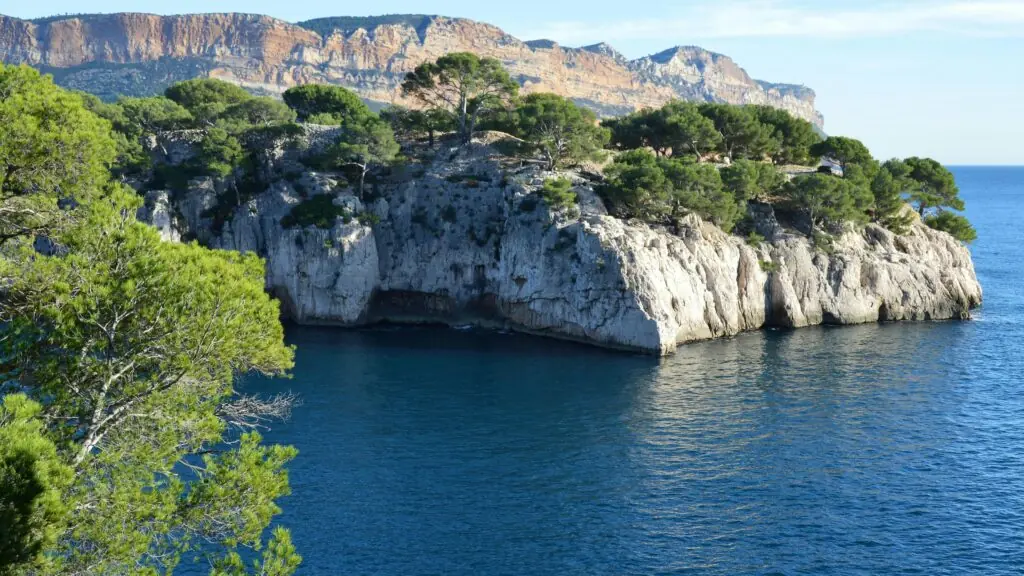
These are the calanques. There is nothing else like them in France, and very little like them anywhere in Europe. The word itself, borrowed from Corsican, just means “inlet” — but for the people of Marseille, and for anyone who has seen them, the Calanques means this specific stretch of coast between the edge of Marseille and the small fishing port of Cassis. A 20-kilometer ribbon of impossible geology protected as a national park since 2012.
What They Are and How They Got There
The Calanques are limestone, not granite — which is why they are white, not gray. The rock is a soft, highly soluble Cretaceous limestone laid down under a shallow tropical sea more than 100 million years ago. Over the last few million years, rivers and groundwater carved steep ravines into the rock, and when sea levels rose at the end of the last ice age, the sea flooded into those ravines and turned them into inlets. Hence the fjord-like look, even though the Mediterranean has none of the glacial history of the real fjords of Norway.
The result is a landscape that feels, when you are in it, more like the Greek islands or the coast of Croatia than the south of France. The water is clear enough that you can see 10 meters down to the pebble bottom. The cliffs are so white in the midday sun that you need sunglasses just to look at them. And the scent of the surrounding scrubland — wild rosemary, thyme, pine, juniper, and the dense Provençal shrubs collectively known as garrigue — drifts out over the water and hangs in the still air of the inlets.
The Three Most Famous Calanques
There are about two dozen calanques in total, but three of them get most of the attention. Each has its own character, and each requires a different amount of effort to reach.
Calanque de Sormiou
The westernmost of the big three, closest to Marseille. Sormiou is the largest of the calanques and the only one with a small residential community at its head — a cluster of old fishermen’s cabins (cabanons) on the beach, a small restaurant, and a handful of boats tied up in the little harbor. In summer, access by car is restricted (you need a reservation at one of the restaurants to drive down), so most visitors hike in from the parking area at the top of the cliff. The hike is about 45 minutes down, longer coming back up. The beach is a small crescent of pebbles and sand with water so clear it looks like a swimming pool.
Calanque de Morgiou
Next door to Sormiou, smaller and slightly less visited. Morgiou has the same cabanon culture — a few dozen small stone fishing huts passed down through Marseille families for generations — and a tiny harbor tucked into the head of the inlet. The hike in is similar in difficulty to Sormiou. Morgiou is also the location of the Cosquer Cave, a prehistoric painted cave discovered underwater in 1985 whose entrance is now below sea level; the paintings inside date to around 27,000 years ago and include images of penguins, horses, and seal hunts. The original cave is not accessible to the public, but a full-scale replica opened in Marseille in 2022.
Calanque d’En-Vau
The most famous of them all, and the most difficult to reach on foot. En-Vau is a long, narrow fjord with near-vertical limestone walls rising 200 meters straight out of the water, a tiny pebble beach at the far end, and a single dramatic rock pinnacle called the Doigt de Dieu — the Finger of God — standing just offshore at the entrance. It looks exactly like the photographs, which is to say it looks barely real. The hike in from the nearest parking area at the Col de la Gardiole takes about 90 minutes each way over rocky, sometimes steep terrain. There is no shade. Bring more water than you think you need. In July and August, start before 8 a.m. or suffer the consequences.
How to Actually See Them
Because the calanques are protected, because the terrain is rough, and because some of the most beautiful spots are genuinely inaccessible by car, visitors have basically four options. The right one depends on how much time you have, how fit you are, and what you want out of the day.
1. By Boat from Cassis
The easiest option, and the one most first-time visitors choose. From the small port of Cassis, multiple tour boat operators run 45-minute, 65-minute, and 90-minute trips that cruise along the coast and into several of the calanques. The boats cannot enter the most narrow inlets, and you don’t get to swim, but you see the cliffs from the water — which is arguably the best vantage point — and you get a sense of the whole coastline in a single afternoon. No fitness required. Reliable, relatively inexpensive, and in the summer the boats run all day.
2. By Kayak from Cassis or Marseille
The best option if you are reasonably fit and want to actually get into the calanques rather than just look at them from a distance. Several outfitters in both Cassis and the Marseille area rent kayaks and run guided half-day and full-day paddles along the coast. You can paddle into inlets the tour boats can’t reach, beach your kayak on tiny coves accessible no other way, and swim in water so clear it feels like flying.
A full-day kayak tour typically covers 10 to 15 kilometers of coastline and includes a long stop at one of the smaller calanques for swimming and lunch. Strongly recommended if the conditions are right — the Mediterranean is usually calm in summer, but wind can come up fast. Book a guided tour if it is your first time.
3. On Foot
The hiking network through the Calanques National Park is extensive and well-marked, with several official trails running along the clifftops and down into the major inlets. The GR 98-51 is the main long-distance path and traces most of the coast from Marseille to Cassis. Individual calanques can be reached on shorter day hikes from various trailheads.
Be warned: the trails are rocky, often steep, frequently exposed to full sun, and there is no water on the trails themselves. In the summer, the park sometimes closes trails entirely during high fire risk — a real possibility from June through September. Check the park’s daily access status before you go (the website posts a color-coded fire risk map every morning).
4. From the Water, Swimming
For the strongest swimmers and the most dedicated: you can swim from one calanque to the next along the coast in calm conditions. This is what locals from Marseille do on summer weekends. Do not attempt it without knowing what you are doing, but if you are confident in open water, swimming in the calanques is a genuinely unforgettable experience. The water temperature in July and August is around 23–25°C (73–77°F), perfect for long swims.
Cassis: The Village at the End
Most visits to the Calanques begin or end in Cassis, the small fishing port that serves as the eastern gateway to the park. Cassis is picturesque in a way that feels almost unfair — a small crescent harbor full of sailboats and fishing boats, pastel-colored houses lining the waterfront, a ruined medieval château on the hill above, and the enormous white cliff of Cap Canaille (the tallest maritime cliff in France at nearly 400 meters) looming over the harbor at the opposite end of town from the calanques themselves. It is a real working town — people live here, fish here, grow the local white wine here — but it also happens to be breathtakingly beautiful.
The town’s white wine, Cassis AOC, is one of the oldest appellations in France and one of the very few dry whites produced on the Mediterranean coast. The vineyards climb the slopes behind the town, and several of the estates are open for tastings. The wine is crisp, mineral, and lightly floral — perfect with the local seafood and, not coincidentally, perfect after a morning of hiking.
Plan at least a half day in Cassis itself beyond whatever calanques activity you choose. Eat lunch at a waterfront restaurant. Order the bourride (a local fish stew) if it’s on the menu. Walk up the hill to the château for the view. Drive the Route des Crêtes, the spectacular cliff road that winds up and over Cap Canaille on the way to La Ciotat — one of the most dramatic coastal drives in France, with pullouts every few hundred meters for views back down to the village.
When to Go
The Calanques are a summer destination, but the summer is not always the best time to visit them. A few things to consider:
- April, May, early June: Ideal. Mild weather, flowering garrigue, cooler hiking conditions, and open trails. The water is still cold for swimming but the scenery is at its best.
- Late June through August: Peak season. Warm water, long days, and crowds. Many trails close during high fire risk, parking fills by 8 a.m., and the sun is brutal. If you come in high summer, start early and plan the hardest activity for the coolest hours.
- September and October: Another excellent window. Water is still warm enough for swimming, crowds thin out, and the light turns golden and soft. Arguably the best time overall if you can swing it.
- Winter: Quiet, cool, and often beautiful. Swimming is out but hiking is excellent, and the cliffs without crowds have a stark, stripped-down drama that summer visitors never see.
Where the Calanques Fit in a Provence Trip
The Calanques are the southern edge of Provence, far enough from Avignon or the Luberon that they don’t easily fit into a quick two- or three-day trip focused on hilltop villages and Roman sites. For most visitors, the best approach is to combine the Calanques with Aix-en-Provence and Marseille on a southern swing of a longer Provence itinerary — Aix for the city and the Cézanne landscapes, Marseille for the Old Port and the Panier district, and Cassis and the Calanques for a full day on the coast.
A six-day Provence tour from Paris typically folds this southern stretch into a complete week that also includes the classic inland destinations — the Luberon, lavender country, and the Roman sites around Avignon. It’s the most natural way to see both the inland Provence of hilltop villages and lavender fields and the coastal Provence of white cliffs and turquoise water in a single trip.
A Landscape That Doesn’t Photograph Right
Here is the honest truth about the Calanques: the photographs don’t quite do them justice, but in an unusual way. Most famous landscapes are the opposite — the photos oversell them, and the reality is slightly disappointing. The Calanques are the reverse. The photographs show you the colors and the cliffs, but they can’t show you the scale, the silence, the smell of the garrigue in the heat, the echo of your own footsteps on the limestone, or the particular blue-green of water so clear that swimming in it feels like you are suspended in air.
You have to be there. And once you are there — standing on a cliff at En-Vau looking down 200 meters to a tiny crescent of pebble beach with a single kayak pulled up on the shore, or floating on your back in the middle of Sormiou with the cliffs rising around you on three sides, or just sitting at a café on the harbor at Cassis watching the fishing boats come in with the day’s catch — you understand why the people of Marseille have been guarding this coast, cabanon by cabanon, for generations.
Want to combine the Calanques with the rest of Provence in a single trip? A six-day Provence tour from Paris covers the coastal south — Aix, Marseille, Cassis — alongside the inland classics like the Luberon and lavender country.
Frequently Asked Questions
How do you visit the Calanques?
By boat from Cassis or Marseille, by kayak, or on foot from the trailheads above Cassis; the classic three-calanque boat loop takes about 45 minutes, and the hike into En-Vau takes a half day.
Are the Calanques ever closed?
Yes. On high fire-risk days from June through September the massif closes to hikers, and the Sugiton calanque requires a free summer reservation to limit crowds. Check the Calanques National Park site the day before.
Can you swim in the Calanques?
Yes, in coves like Port-Miou, Port-Pin, and En-Vau, reached by foot, kayak, or boat drop. There are no facilities; carry water and shade.